


Benefits of Stretching in the Morning
Waking up stiff or sluggish is common, but a simple habit can change how your day starts. The benefits of stretching in the morning go beyond flexibility, helping you feel more alert, mobile, and mentally ready for the day ahead. Even a few minutes can make a noticeable difference.
In this article, we will explore how morning stretching supports your body and mind, starting with its most important benefits.
What are the benefits of stretching in the morning for your body and mind?
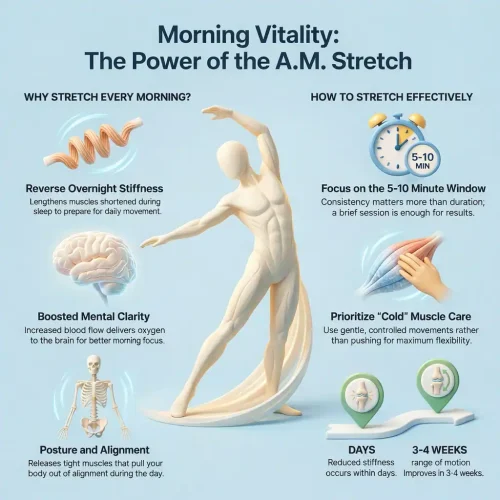
This infographic highlights the core benefits of stretching in the morning, from reversing overnight stiffness to improving posture and mental focus. A short five to ten minute session can help activate circulation, support joint mobility, and prepare your body for daily movement. Over time, these morning stretching benefits build into stronger mobility and greater physical comfort.
The benefits of stretching in the morning include reduced muscle stiffness, improved blood circulation, better range of motion, and increased mental alertness, making it easier for your body and brain to transition from rest to activity. These morning stretching benefits help you move more comfortably and feel more focused as the day begins.
When you wake up, your muscles and joints have been inactive for hours. Gentle stretching helps reverse that stillness and prepares your body for movement.
Key physical benefits include:
- Reduced muscle stiffness after waking, especially in the back, hips, and shoulders
- Increased blood circulation, which delivers oxygen to muscles and joints
- Improved range of motion, making everyday movements feel easier
- Better posture support by releasing tight muscles that pull your body out of alignment
Stretching in the morning also supports how your nervous system shifts from sleep to alertness. Slow, controlled movements combined with steady breathing can help your body feel more awake without overstimulation.
Mental and cognitive benefits often include:
- Improved focus as blood flow increases to the brain
- A calmer start to the day through intentional movement
- Greater body awareness, which helps you notice tension before it builds
Over time, these effects can compound. A consistent morning stretch routine benefits both physical mobility and mental readiness, helping you start each day with more control over how your body feels and performs.
Why does stretching in the morning feel so good after waking up?
Stretching in the morning feels good because it reduces muscle stiffness after waking, increases blood circulation, and gently activates the nervous system, helping your body shift from rest to movement. These morning stretching benefits explain why even simple stretches can create immediate relief and a sense of physical ease.
After several hours of sleep, your muscles are in a shortened and inactive state. Stretching lengthens those muscles and encourages fresh blood flow, which brings oxygen and nutrients to areas that feel tight or sore.
Several physiological responses contribute to this sensation:
- Increased blood circulation warms muscles and joints, making movement feel smoother
- Reduced muscle tension eases the stiffness commonly felt in the neck, back, and hips
- Nervous system activation signals your body that it is time to become alert and responsive
Stretching can also stimulate the release of feel-good brain chemicals that support mood and focus. This is one reason a brief stretch can make you feel more awake than staying still.
From a practical standpoint, this pleasant sensation reinforces the habit itself. When stretching feels good, you are more likely to repeat it, which supports long-term mobility, posture improvement, and joint health as part of a daily stretching habit.
Is stretching good in the morning or should you wait until later in the day?
Stretching is good in the morning when it is done gently, because it helps reduce stiffness, improve blood circulation, and prepare your body for daily movement, while later-day stretching can support flexibility gains when muscles are warmer. The benefits of stretching in the morning focus on readiness and mobility rather than pushing range of motion.
In the morning, your body is transitioning out of rest. Muscles and connective tissue are less pliable than later in the day, which means intensity matters.
Morning stretching works best when it emphasizes:
- Gentle, controlled movements instead of deep or aggressive stretches
- Improving joint health and mobility rather than maximum flexibility
- Waking up stiff muscles in the hips, back, shoulders, and neck
Stretching later in the day can feel easier because your body temperature is higher and muscles are already active. This timing may be better if your goal is to improve flexibility or support muscle recovery after exercise.
The key difference is intent. Morning stretching benefits focus on reducing muscle stiffness after waking and improving movement quality, while later stretching is often about extending range of motion.
If you stretch with awareness of timing and intensity, both morning and later sessions can play a useful role in a balanced daily stretching habit.
Is it good to stretch every morning as part of a daily routine?
It is good to stretch every morning as part of a daily routine because consistent, low-intensity movement helps reduce muscle stiffness, maintain flexibility, and support joint health without overloading the body. These morning stretch routine benefits build gradually and make daily movement feel easier and more controlled.
Daily morning stretching works best when it is kept simple and sustainable. You are not trying to push limits but to keep your body moving well.
Benefits of stretching every morning include:
- Reduced buildup of muscle tension from sleeping or prolonged sitting
- More consistent range of motion across joints like hips, shoulders, and spine
- Better posture support by preventing tightness from becoming habitual
- Improved body awareness that helps you notice early signs of stiffness
Consistency matters more than duration. Even five to ten minutes of gentle stretching can support long-term mobility and flexibility when practiced regularly.
Over time, this habit can make everyday actions like walking, bending, or sitting for long periods feel more comfortable. As part of a daily stretching habit, morning movement sets a physical baseline that supports healthier movement patterns throughout the day.

What happens if you do stretching every day in the morning?
If you do stretching every day in the morning, your body gradually adapts by improving flexibility, reducing muscle stiffness, and supporting better joint mobility over time. These stretching in the morning benefits tend to show up as easier movement, fewer aches, and more consistent physical comfort throughout the day.
In the short term, daily stretching helps your body recover from overnight inactivity. Muscles feel less tight, and simple movements like standing up or walking require less effort.
With regular practice, longer-term effects often include:
- Improved range of motion across major joints such as hips, shoulders, and spine
- Reduced frequency of stiffness related to prolonged sitting or repetitive movement
- Better posture improvement as tight muscles loosen and balance improves
- Increased mobility that supports everyday tasks and light physical activity
Daily stretching also supports the nervous system by reinforcing smooth, controlled movement patterns. This can make your body feel more coordinated and responsive rather than stiff or guarded.
The key is consistency without intensity. Gentle daily stretching allows benefits to accumulate while minimizing strain, making it a sustainable approach to maintaining flexibility and joint health.
What happens if you do not stretch in the morning?
If you do not stretch in the morning, muscle stiffness after waking can persist longer, making movement feel restricted and less comfortable during the early part of the day. Over time, skipping morning stretching may contribute to reduced mobility, increased muscle tension, and slower physical readiness.
Without gentle movement, muscles and joints remain in a shortened state after sleep. This can affect how smoothly you transition into daily activities like walking, sitting, or bending.
Common effects of not stretching in the morning include:
- Ongoing tightness in the back, hips, neck, and shoulders
- Limited range of motion that makes movement feel stiff or awkward
- Increased muscle tension that can influence posture throughout the day
- A slower feeling of physical and mental alertness
While skipping morning stretching does not cause immediate harm, the lack of a daily mobility reset can allow stiffness to accumulate. Over time, this may affect joint health and make it harder to maintain flexibility as part of an active lifestyle.
Adding even a brief morning stretch routine can help counter these effects by restoring movement and circulation early in the day.
How many minutes should you stretch in the morning for real benefits?
Stretching for five to ten minutes in the morning is enough to experience meaningful benefits, including reduced muscle stiffness, improved blood circulation, and better mobility. This short duration supports morning stretching benefits without placing stress on muscles that are still warming up.
Morning stretching is about preparation, not intensity. A brief session allows your body to ease into movement while respecting the natural stiffness present after sleep.
A practical time breakdown often looks like this:
- One to two minutes of gentle full-body movement to wake up joints
- Three to five minutes focused on commonly tight areas like hips, back, shoulders, and calves
- One to two minutes of slow breathing paired with light stretching to support nervous system activation
Longer sessions are not necessary unless stretching is your primary form of morning movement. For most people, consistency matters more than duration.
If time is limited, even three to five minutes can still reduce muscle stiffness after waking and improve range of motion. Over time, this small daily investment supports flexibility, joint health, and a sustainable daily stretching habit.
Which muscles benefit most from stretching in the morning?
The muscles that benefit most from stretching in the morning are those that become tight during sleep, including the hips, lower back, hamstrings, calves, shoulders, and neck. Stretching these areas in the morning supports mobility and reduces muscle stiffness after waking.
During sleep, your body stays in relatively fixed positions for hours. This often leads to tightness in postural and weight-bearing muscles.
Muscle groups that respond especially well to morning stretching include:
- Hip flexors and glutes, which affect walking and posture
- Hamstrings and calves, which influence lower body movement
- Lower back muscles that support spinal mobility
- Shoulders and neck, which commonly hold tension
Focusing on these areas can improve range of motion and make everyday movements feel smoother. Over time, stretching these muscles consistently supports joint health and reduces the feeling of waking up stiff.
Read More: What Is The Best Morning Routine Habits For Success And Happiness
How does morning stretching improve flexibility and range of motion?
Morning stretching improves flexibility and range of motion by gently lengthening muscles and connective tissue that tighten during sleep, allowing joints to move more freely throughout the day. These morning stretching benefits reduce resistance in everyday movements and support smoother mobility.
Stretching increases the ability of muscles to move through their natural range without strain. When done regularly, this encourages gradual improvements rather than sudden changes.
Key ways stretching supports flexibility include:
- Reducing muscle stiffness that limits joint movement
- Supporting mobility around joints like hips, shoulders, and spine
- Encouraging better movement patterns through repeated practice
Flexibility gains from morning stretching tend to be subtle at first. With consistency, your body adapts by maintaining a wider and more comfortable range of motion throughout the day.

How does morning stretching support posture and reduce muscle tension?
Morning stretching supports posture and reduces muscle tension by releasing tight muscles that pull the body out of alignment after sleep. These stretching in the morning benefits help you maintain better balance and alignment during sitting, standing, and movement.
Poor posture is often linked to tight hips, hamstrings, chest, and neck muscles. Stretching these areas helps restore muscle length and balance.
Postural benefits of morning stretching include:
- Reduced tension in the upper back and shoulders
- Improved spinal alignment through increased mobility
- Better awareness of how your body holds itself
By easing muscle tension early in the day, stretching helps prevent stiffness from influencing posture during prolonged sitting or standing.
Does stretching in the morning increase energy and mental focus?
Stretching in the morning can increase energy and mental focus by improving blood circulation and gently activating the nervous system. These morning stretching benefits help you feel more alert without relying on intense movement.
As circulation improves, more oxygen reaches the brain and muscles. This supports clearer thinking and a smoother transition into daily tasks.
People often notice:
- A greater sense of wakefulness after gentle movement
- Improved focus compared to staying inactive
- A calmer, more controlled mental state
Because stretching is low impact, it provides mental stimulation without causing fatigue, making it a useful tool for starting the day with clarity.
How soon will stretching in the morning show results?
Stretching in the morning can show short-term results within days, such as reduced stiffness, while flexibility and mobility improvements typically appear after several weeks of consistent practice. These benefits of stretching in the morning depend on frequency and technique.
Early changes often include easier movement and less tightness after waking. Long-term changes develop as muscles adapt to repeated stretching.
Progress is usually seen as:
- Less muscle stiffness after waking within one to two weeks
- Improved range of motion after three to four weeks
- Better posture and movement comfort over longer periods
Consistency matters more than intensity when evaluating results.
How do you know if your morning stretching routine is working?
You know your morning stretching routine is working when movement feels easier, stiffness decreases, and daily activities require less effort. These signs reflect effective morning stretch routine benefits.
Progress indicators often include:
- Reduced tightness in commonly stiff areas
- Improved mobility when walking, bending, or sitting
- Better posture awareness during the day
Tracking how your body feels over time is more useful than measuring flexibility alone.
What are common mistakes to avoid when stretching in the morning?
Common mistakes when stretching in the morning include overstretching cold muscles, rushing movements, and ignoring discomfort signals. Avoiding these mistakes helps you get the benefits of stretching in the morning safely.
Key mistakes to avoid:
- Forcing deep stretches immediately after waking
- Holding breath instead of breathing steadily
- Treating pain as a normal part of stretching
Gentle movement and control should guide every stretch.
Are there any disadvantages of stretching in the morning?
Stretching in the morning has few disadvantages when done gently, but aggressive or poorly timed stretching can increase discomfort or strain. Understanding these risks helps you stretch safely.
Potential drawbacks include:
- Muscle strain from overstretching
- Increased stiffness if movements are rushed
- Discomfort when flexibility limits are ignored
These issues are avoidable by keeping stretches light and controlled.
Which is better for mornings: stretching or walking?
Stretching and walking serve different purposes in the morning, with stretching improving mobility and walking increasing overall circulation. Combining both often delivers the greatest morning stretching benefits.
Stretching prepares joints and muscles, while walking raises heart rate slightly. Together, they create a balanced start.
A simple approach is:
- Stretch first to reduce stiffness
- Walk afterward to reinforce circulation and alertness
What time of day is best for stretching based on your goals?
The best time of day for stretching depends on your goal, with morning stretching supporting mobility and readiness, and later stretching supporting flexibility and recovery. The benefits of stretching in the morning align best with daily movement preparation.
Morning stretching helps you move well early, while later sessions may feel deeper. Choosing the right timing depends on whether your focus is mobility, flexibility, or recovery.
Final Thoughts
Morning stretching is not about pushing limits or achieving perfect flexibility. It is about giving your body a gentle signal to wake up, move, and function better throughout the day. When practiced consistently and with control, it supports mobility, posture, circulation, and mental clarity without requiring significant time or effort.
The benefits of stretching in the morning come from its simplicity. Even a few minutes can reduce muscle stiffness after waking, improve range of motion, and help you feel more physically prepared for daily tasks. Over time, this small habit can make movement feel easier and more natural.
If you want a routine that is sustainable, effective, and adaptable to any schedule, morning stretching fits naturally into your day. By listening to your body and keeping the movements intentional, you can turn a brief stretch into a long-term investment in joint health, flexibility, and overall well-being.
Frequently Asked Questions
Q: Should you stretch as soon as you wake up?
A: Stretching as soon as you wake up is generally good if you keep it gentle, as it helps reduce muscle stiffness after waking and improves blood circulation. Light movements support the benefits of stretching in the morning without stressing cold muscles.
Q: What chemical is released when you stretch?
A: When you stretch, the body releases endorphins, which help reduce muscle tension and improve mood. This nervous system activation is one reason why stretching in the morning feels energizing and mentally refreshing.
Q: Does stretching in the morning boost metabolism?
A: Stretching in the morning can slightly boost metabolism by increasing blood circulation and activating muscles, but the effect is mild. It supports morning stretching benefits for energy, though it works best alongside regular movement or exercise.
Q: Does stretching count as exercise?
A: Stretching counts as light physical activity that improves mobility and joint health, but it is not a complete workout. A daily stretching habit supports morning flexibility and posture improvement but doesn’t replace strength or cardio training.
Q: Can morning stretching help with back pain or joint stiffness?
A: Morning stretching can help reduce back pain and joint stiffness by easing tight muscles, improving blood circulation, and restoring gentle movement after sleep. While it may not treat underlying conditions, consistent morning stretching often makes movement feel more comfortable and less restricted.
