

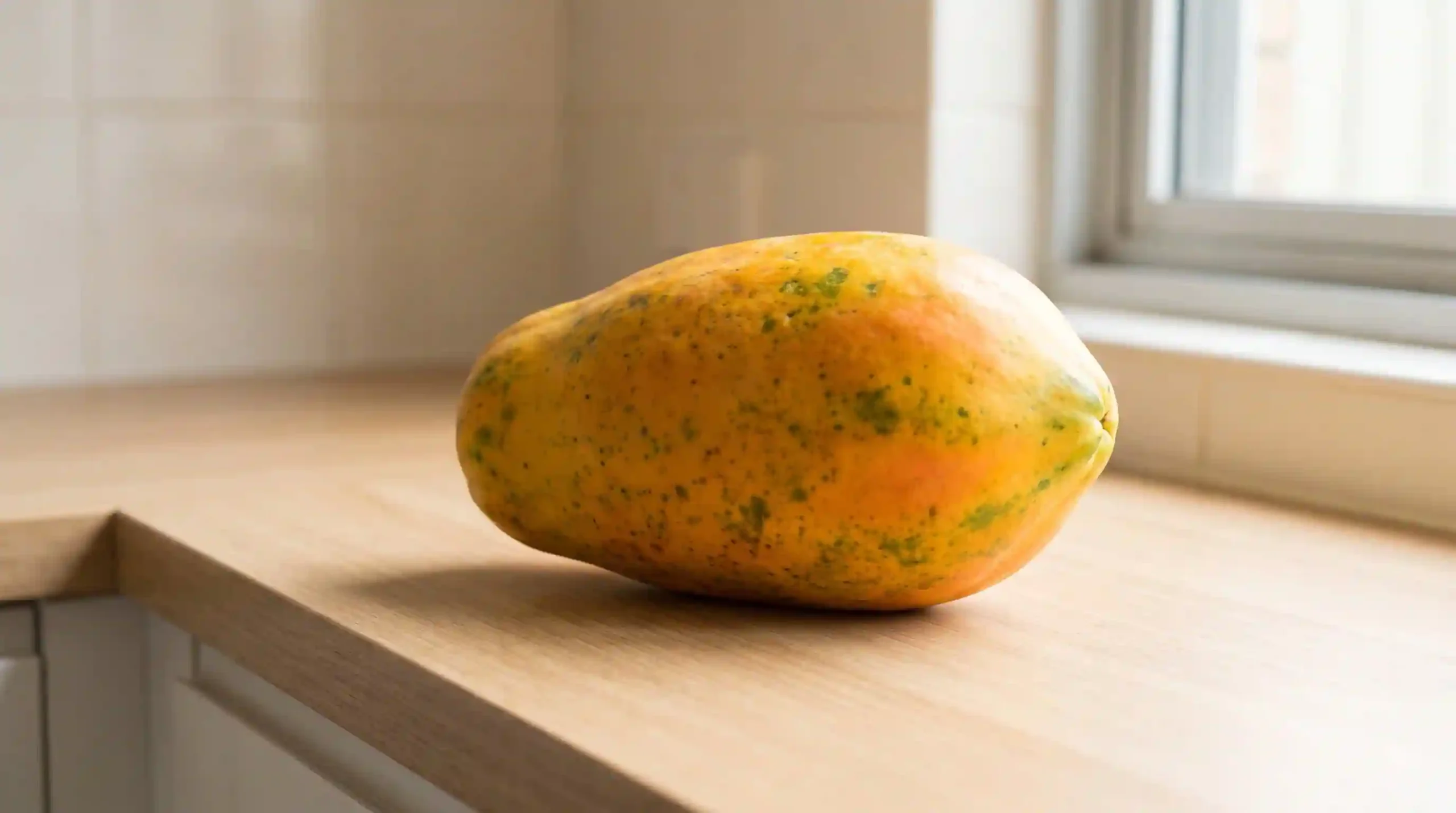
Knowing how to tell if a papaya is ripe can help you choose fruit that is sweet, tender, and ready to eat without cutting it open first. If you are wondering how to know if a papaya is ripe, check its skin color, firmness, aroma, and overall condition rather than relying on one sign alone. In this article, we will explore how to recognize a ripe papaya, how to ripen one at home, how to choose and store it, and when it is better not to eat it.
How to Tell If a Papaya Is Ripe?
A ripe papaya generally has developing yellow to yellow-orange skin, gives slightly when pressed gently, and may have a pleasant fruity aroma. Because papaya varieties differ in appearance and ripening patterns, checking several signs together gives a better indication of readiness.
Start with the skin. A papaya that is completely green and very firm is generally less mature than one showing substantial yellow coloring and some softness.
Look for these signs:
- Yellow or yellow-orange areas on the skin
- Slight give when pressed gently
- A pleasant fruity aroma, particularly near the stem end
- No visible mold or wet deterioration
- Flesh that is tender rather than excessively soft or mushy
Use gentle pressure rather than squeezing the fruit firmly. Excessive pressure can bruise the flesh and make it harder to judge its condition.
Color can change before the fruit reaches your preferred eating texture, so use skin color together with firmness and aroma.
What Color Is the Skin of a Ripe Papaya?
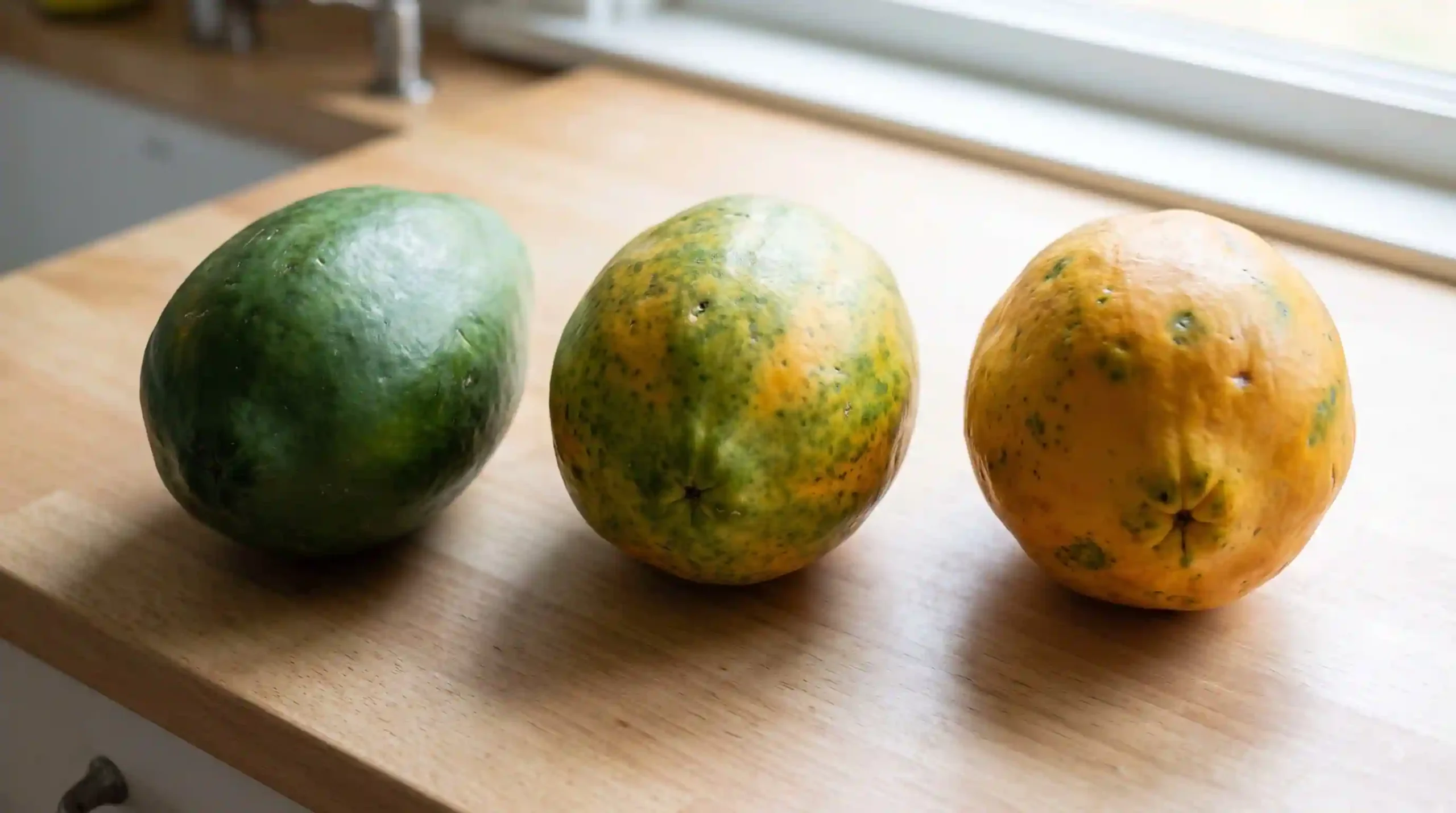
The skin of a ripe papaya is generally yellow, yellow-orange, or orange, depending on the variety. Some papayas can retain green areas while becoming suitable for eating, so color alone does not always establish complete ripeness.
As the fruit matures, its skin commonly changes from predominantly green toward yellow. The amount of color change can vary according to the variety and the stage at which the fruit was harvested.
You may see:
- Mostly green skin on an earlier-stage fruit
- Green skin with developing yellow areas
- Increasing yellow color as ripening progresses
- Yellow-orange or orange skin on some varieties
A papaya should not automatically be considered unripe simply because some green remains. Instead, use color as the first visual clue and then check its firmness and aroma.
A fruit with substantial yellow coloring and slight give is generally closer to eating ripeness than one that remains completely green and hard.
How Does a Ripe Papaya Feel and Smell?
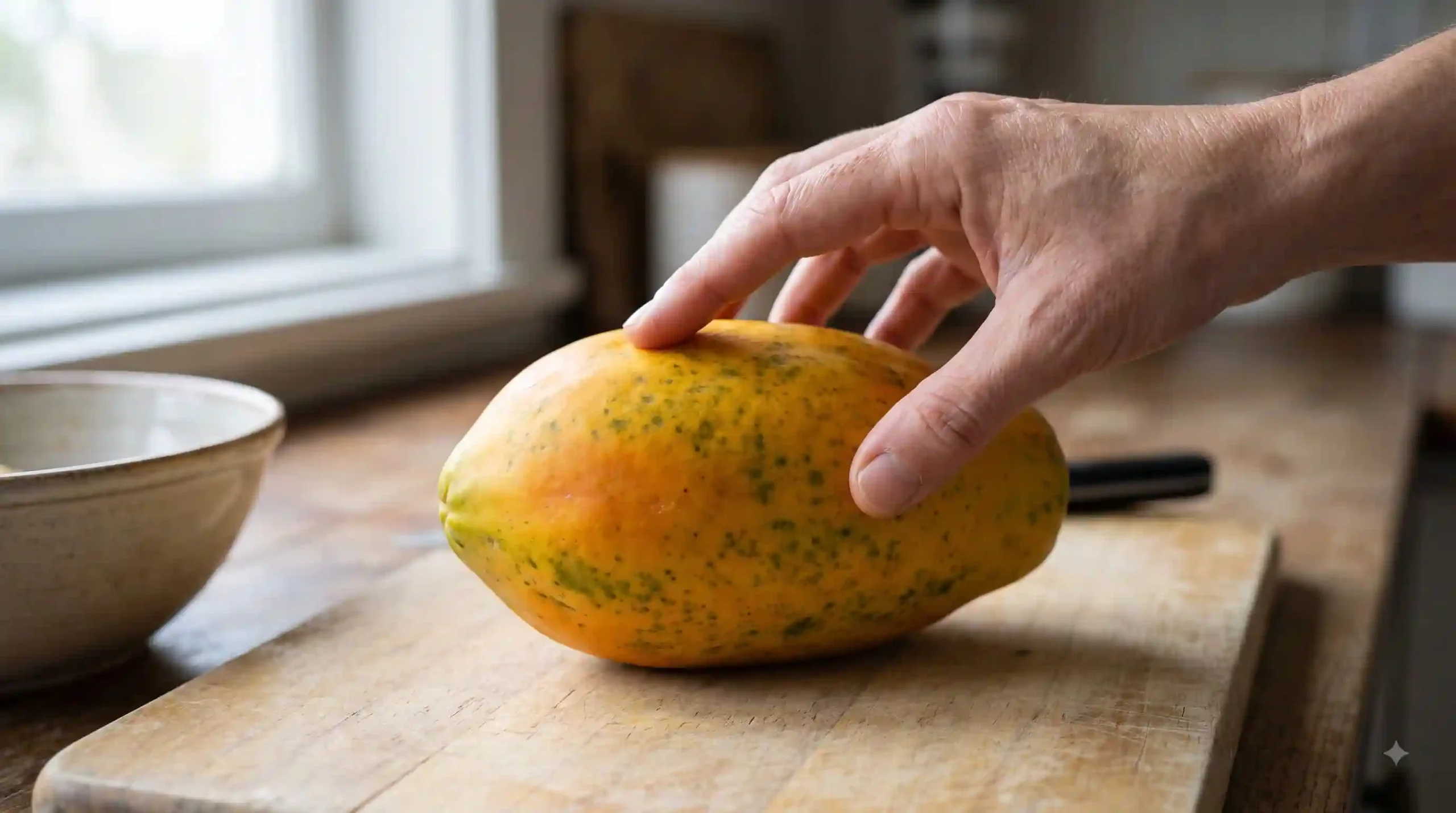
Another useful part of how to tell if a papaya is ripe is checking how the fruit feels and smells. A ripe papaya should feel slightly yielding when pressed gently and may develop a sweet, fruity aroma. A ripe papaya should feel slightly yielding when pressed gently and may develop a sweet, fruity aroma. An underripe fruit is generally firmer and has less noticeable aroma.
To check firmness, hold the fruit carefully and press the skin lightly with your fingertips.
Use these general cues:
- Very hard: likely not ready for a soft, sweet texture
- Slightly yielding: closer to eating ripeness
- Very soft: may be past its ideal texture
- Mushy or wet: may indicate deterioration
The aroma can provide another useful clue. A pleasant fruity smell is commonly associated with a ripe papaya, while a sour, fermented, or rotten odor can indicate deterioration.
If the fruit smells unpleasant or has wet, leaking, or severely damaged areas, assess it for spoilage rather than assuming it is simply very ripe.
How to Ripen a Papaya Quickly at Home?
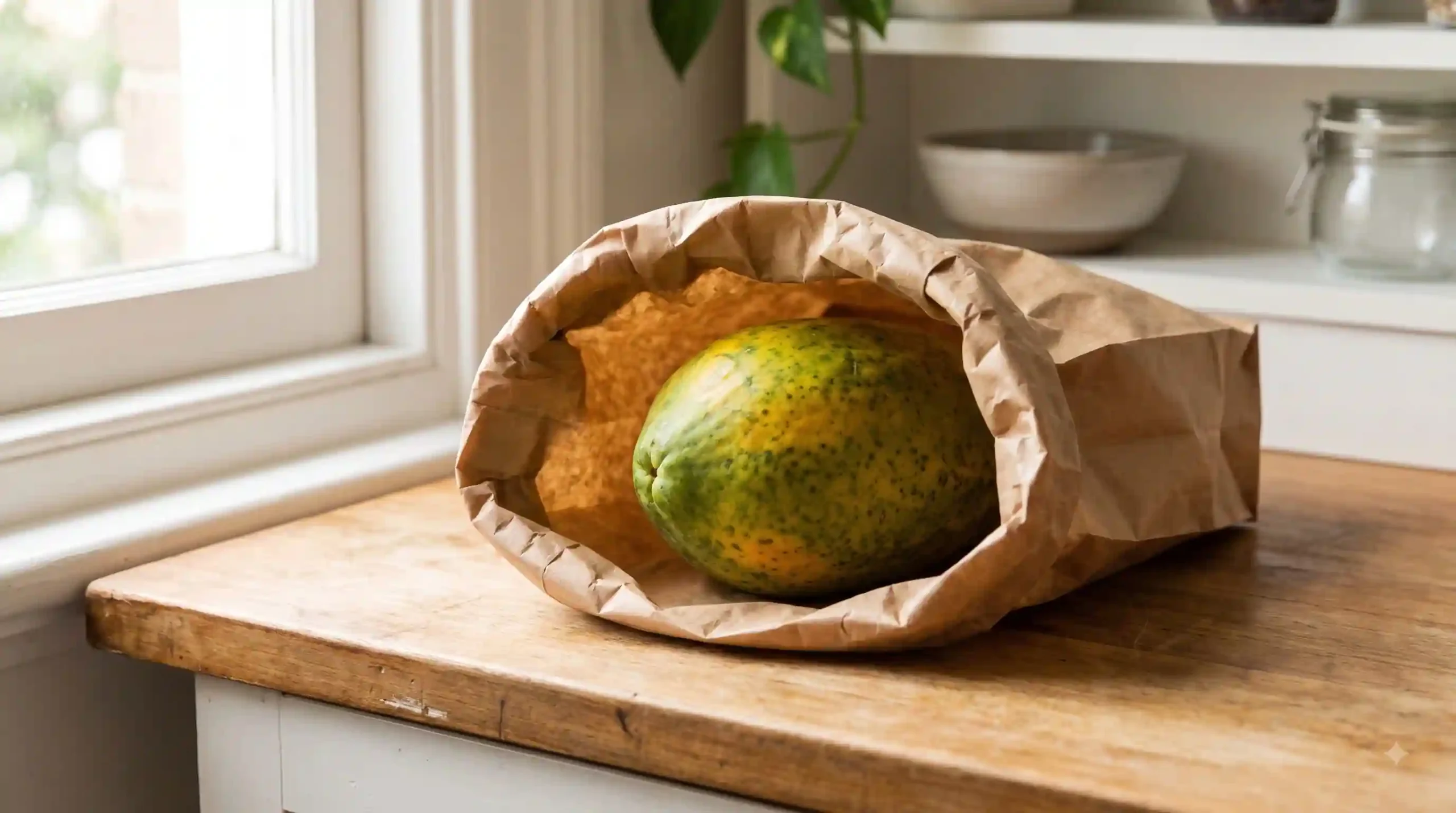
A suitable papaya can continue ripening at room temperature when it has been harvested at an appropriate stage. Keep the whole fruit at room temperature away from excessive heat and direct sunlight, then check it regularly as its color and texture change.
You can monitor the process by looking for:
- Increasing yellow coloration
- Gradual softening
- A developing fruity aroma
- A reduction in very firm texture
Papaya is a climacteric fruit, so appropriate fruit can continue ripening after harvest. However, harvest maturity matters. Fruit harvested too early may not develop the same sweetness and eating quality as fruit harvested at a more mature stage.
Will a Papaya Ripen on the Counter?
Yes, a suitable papaya can ripen on the counter at room temperature. A firm fruit with substantial green coloring generally needs more time than one that has already started changing color.
Keep it in a dry, well-ventilated place and check it regularly. Once it reaches the softness you prefer, refrigeration can slow further softening.
Avoid using excessive heat to accelerate ripening because high temperatures can contribute to deterioration rather than improve fruit quality.
Why Will My Papaya Not Ripen?
A papaya may fail to develop the expected eating quality if it was harvested too early or has begun deteriorating. A fruit that remains very hard and green without normal changes in color, texture, or aroma may not ripen as expected.
Inspect it for signs of deterioration, including:
- Visible mold
- Leaking liquid
- Extensive dark or sunken areas
- Severe mushiness
- An unpleasant or fermented smell
If deterioration is present, further ripening is not a way to restore the fruit.
How to Choose and Store a Ripe Papaya?
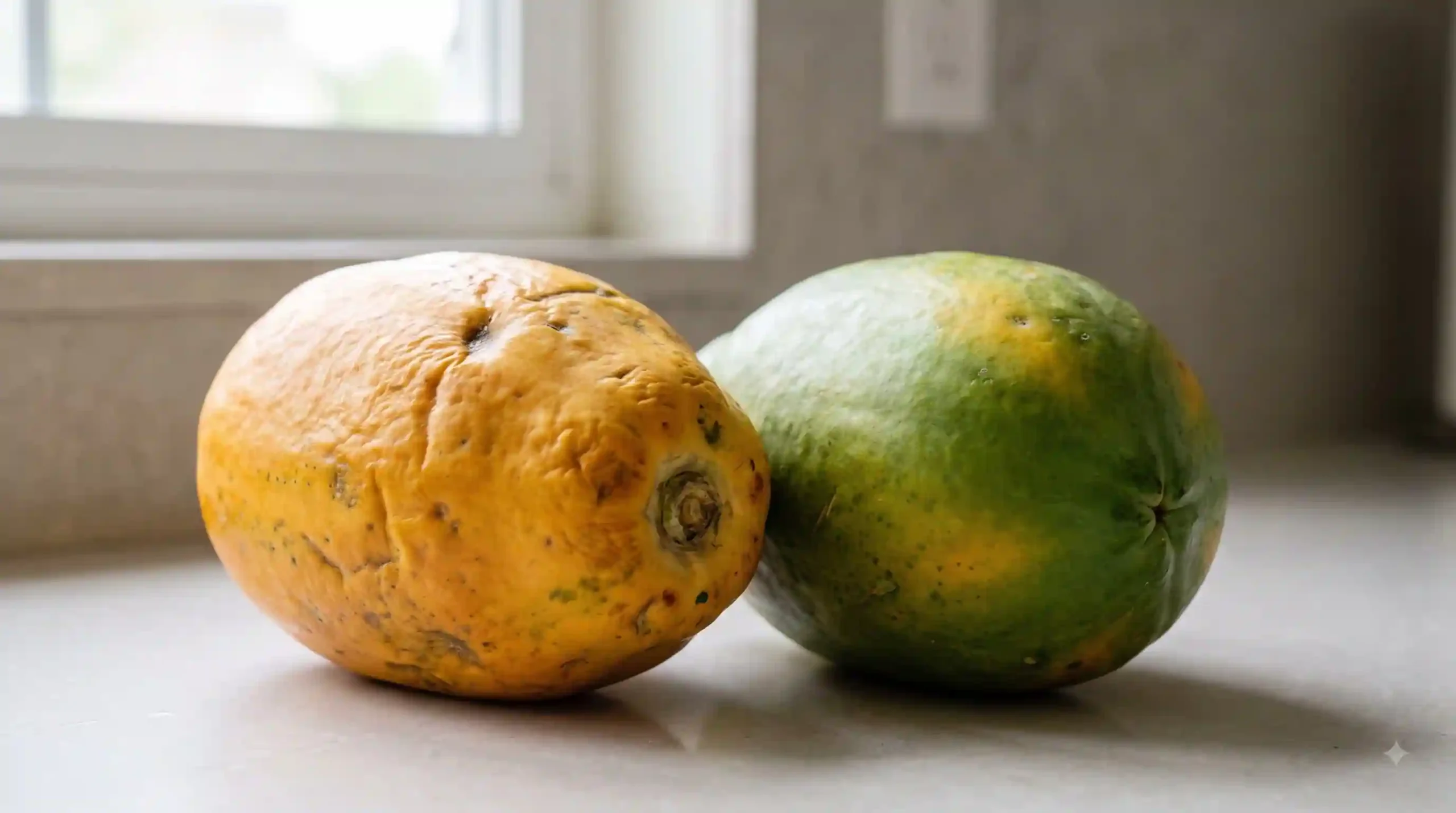
Knowing how to tell if a papaya is ripe also makes it easier to choose the right fruit at the store. Choose a papaya based on when you plan to eat it. For immediate use, select fruit with substantial yellow coloring and slight softness. If you plan to wait before eating it, a firmer fruit with some green coloring can give you more time.
When selecting papaya, examine the entire fruit rather than focusing on one small mark.
Look for:
- Developing yellow or yellow-orange skin
- Slight softness without excessive mushiness
- A fresh fruity aroma
- Skin without major damage or deterioration
- No visible mold or leaking liquid
Small superficial marks do not necessarily mean the fruit is spoiled. Deep sunken areas, wet deterioration, mold, or extensive damage are more concerning.
Should You Refrigerate a Papaya?
You can refrigerate a papaya after it reaches the ripeness you want. Refrigeration slows further softening and can help maintain the fruit after it becomes ready to eat.
If the papaya is still firm and needs additional ripening, room-temperature storage is generally more appropriate. Once ripe, refrigeration can help extend its usable storage period.
After cutting the fruit, refrigerate the pieces in a clean, covered container rather than leaving cut papaya at room temperature.
When Should You Not Eat a Papaya?
Do not eat a papaya that shows clear signs of spoilage, such as visible mold, extensive leaking, severe deterioration, or a strong rotten or fermented odor.
Check both the skin and flesh when assessing the fruit.
Discard the papaya if you notice:
- Visible mold
- Extensive wet or leaking areas
- A strong rotten or fermented smell
- Severe mushiness or breakdown
- Extensive dark, sunken, or deteriorated areas
Ripeness and food safety are different questions. A papaya can look yellow and ripe while still being unsuitable to eat because it has deteriorated.
Soft fruits with visible mold should not simply have the moldy portion cut away and eaten. Mold can penetrate soft produce, so discarding significantly moldy fruit is the safer choice.
What Can You Do With an Unripe Papaya?
An unripe papaya can be used as a firm green vegetable rather than eaten like a soft, sweet papaya. Green papaya can be shredded or cooked and used in salads, soups, curries, stews, and pickled preparations.
Possible uses include:
- Shredded green papaya salads
- Cooked vegetable dishes
- Curries
- Soups and stews
- Pickled preparations
If you want sweet fruit instead, keep a suitable intact papaya at room temperature and allow it to develop further.
If an unripe papaya has already been cut open, do not treat it like an intact fruit ripening on the counter. Cutting exposes the flesh and can increase softening and microbial growth, so cut pieces should be refrigerated and handled as fresh-cut produce.
If you are preparing a whole papaya, you may also want to know whether the seeds can be eaten and how they should be handled. Learn more about eating papaya seeds and related safety considerations.
How to Identify a Fully Ripe Papaya Before Eating?
The easiest way to confirm how to tell if a papaya is ripe is to combine several signs rather than relying on color alone. Look for mature skin color, slight softness, a pleasant fruity aroma, and an absence of spoilage.
Use this simple checklist:
- Check the color. Look for substantial yellow or yellow-orange coloring rather than completely green skin.
- Press gently. The fruit should give slightly without feeling mushy or wet.
- Smell the stem end. A pleasant fruity aroma can support the other signs of ripeness.
- Inspect the skin. Avoid fruit with visible mold, leaking liquid, or severe deterioration.
- Consider the variety. Papayas differ in shape, size, skin color, and mature appearance.
- Check the flesh if already cut. Look for the normal mature color and tender texture expected from that variety.
No single test is perfect. A papaya may develop yellow skin before reaching your preferred eating texture, while another may retain some green areas when it is ready to eat.
The most reliable approach is to combine color, firmness, aroma, and overall condition. If the fruit has mature coloring, gives slightly under gentle pressure, smells pleasantly fruity, and shows no signs of deterioration, it is generally ready to enjoy. If you are still wondering how to tell if a papaya is ripe, the quick rule is simple: check the color, gently test the firmness, smell the fruit, and inspect it for signs of spoilage also you can learn more about papaya flavor and texture here.
Frequently Asked Questions
Q: How Do You Ripen a Papaya Quickly in a Paper Bag?
A: Place a suitable whole papaya in a paper bag and keep it at room temperature away from direct heat and sunlight. Check it regularly for changes in color, firmness, and aroma, and remove it from the bag once it reaches your preferred ripeness.
Q: Will an Unripe Papaya Ripen If I Cut It?
A: It is better to leave an unripe papaya intact while it ripens. Cutting exposes the flesh and can increase softening and microbial growth. If you have already cut it, refrigerate the pieces rather than leaving them at room temperature.
Q: Is It Safe to Eat an Unripe Papaya?
A: Yes, unripe papaya can be eaten when prepared as green papaya in dishes such as salads, soups, curries, or pickles. It is firmer and less sweet than ripe papaya and is commonly prepared as a vegetable.
Sources and References
This article uses information from established university and government food-safety and postharvest resources.
- UC Davis Postharvest Research and Extension Center: Papaya maturity, ripening, color changes, storage, and harvest guidance.
- University of Hawaii CTAHR: Papaya ripeness, color, softness, room-temperature ripening, and refrigeration guidance.
- USDA Food Safety and Inspection Service: Food-safety guidance for moldy soft fruits and produce.
- USDA National Agricultural Library: Postharvest quality and safety information for fresh-cut produce.
