

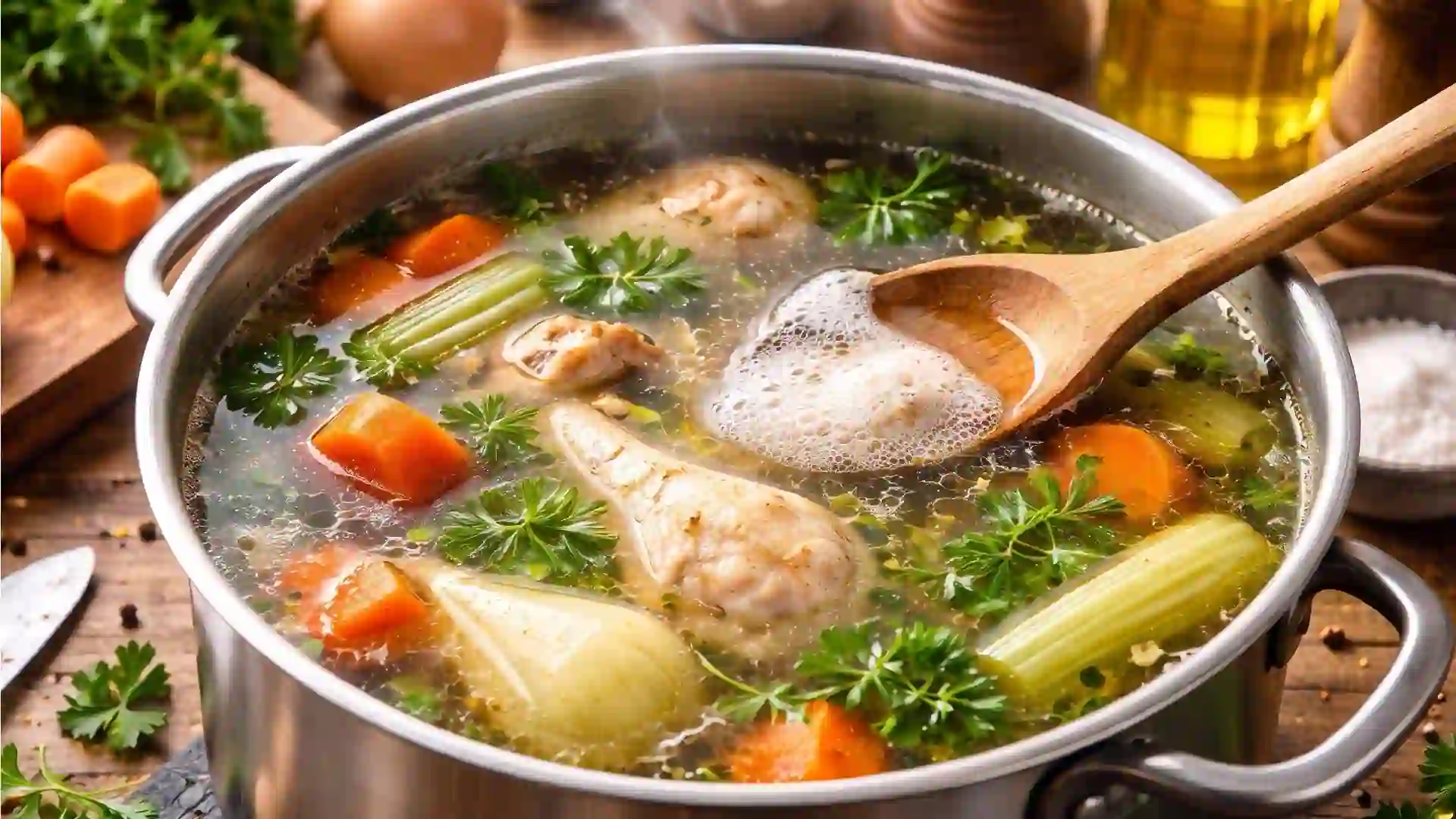
Chicken broth adds flavor to soups, sauces, rice, and other everyday meals, but leftover broth needs proper storage to remain safe. If you are wondering, “How long does chicken broth last in the fridge?”, the general recommendation is 3 to 4 days for opened or freshly prepared broth when refrigerated promptly at 40°F (4°C) or below. Knowing the recommended storage time, how to store chicken broth correctly, and how to recognize spoilage can help reduce food waste and food safety risks. In this article, we will explore chicken broth shelf life, refrigeration, freezing, and signs that leftover broth should be discarded.
How Long Does Chicken Broth Last in the Fridge?
Understanding how long does chicken broth last in the fridge helps you plan meals and avoid wasting leftovers. Opened chicken broth and freshly prepared homemade chicken broth generally last 3 to 4 days in the refrigerator when stored at 40°F (4°C) or below. This recommendation applies when the broth is handled properly and refrigerated promptly. The storage period begins when you open the package or finish preparing the broth.
The USDA recommends refrigerating chicken broth for 3 to 4 days and freezing it for 2 to 3 months for best quality.
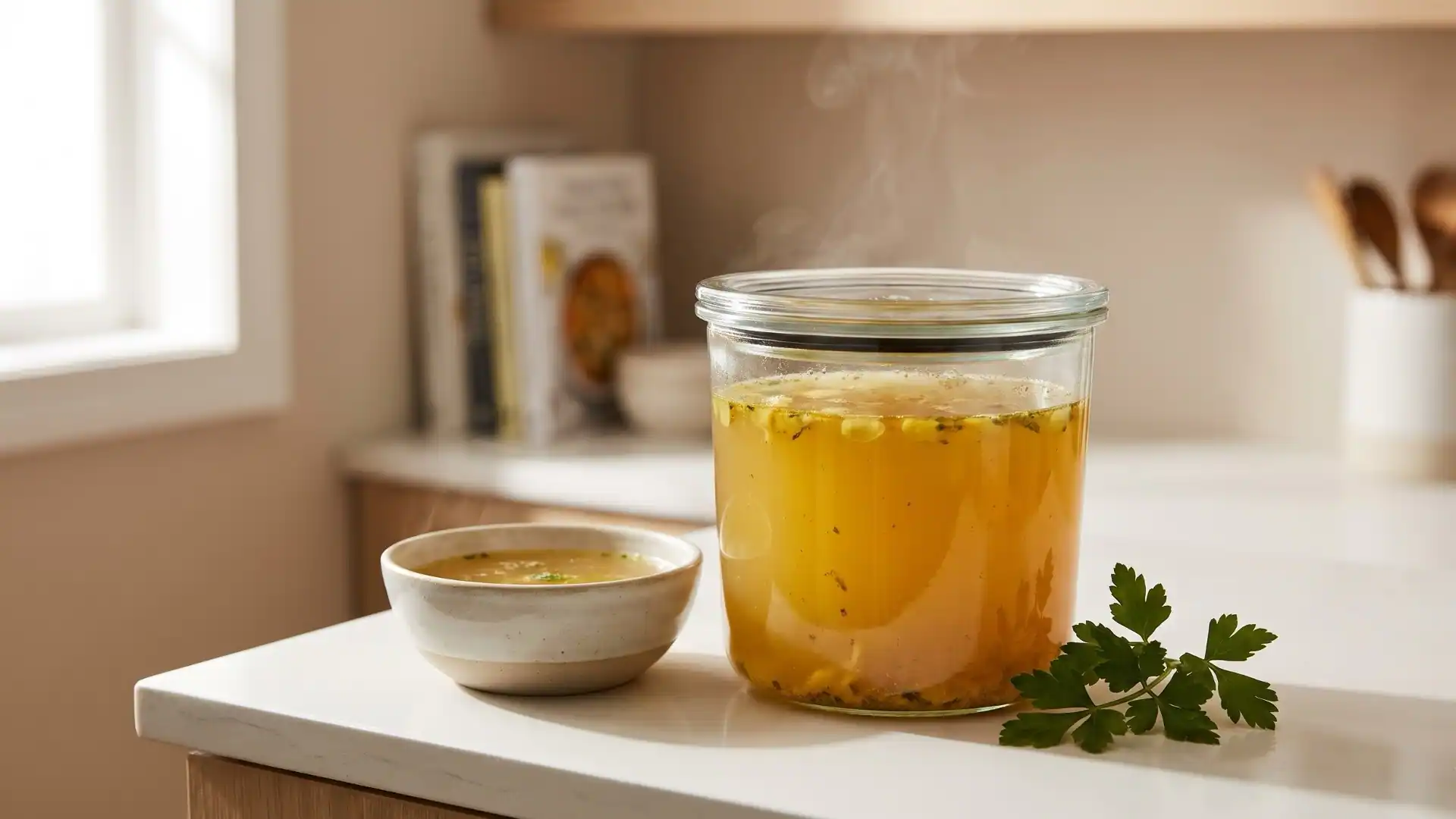
Chicken Broth Refrigerator Storage Guide
Understanding how long does chicken broth last in the fridge makes it easier to plan meals and use leftovers within the recommended storage period. Use this table as a quick reference when deciding how long to keep refrigerated broth and dishes containing it.
| Type of chicken broth or dish | Recommended refrigerator storage |
|---|---|
| Opened store-bought chicken broth | 3 to 4 days |
| Homemade chicken broth | 3 to 4 days |
| Opened canned chicken broth | 3 to 4 days |
| Freshly prepared chicken stock | 3 to 4 days |
| Leftover soup containing chicken broth | Generally 3 to 4 days |
These are general guidelines for properly handled refrigerated broth and leftovers. Follow the manufacturer’s instructions for commercially packaged products whenever they provide specific storage directions.
When Does the Refrigerator Storage Period Begin?
The storage period begins when you open commercially packaged broth or finish preparing homemade broth. It does not restart each time you use the broth or transfer it into another container.
For example, if you open a carton on Monday and use some of the broth on Tuesday, the remaining liquid still follows the original storage period. Transferring it into a clean airtight container, reheating it, or boiling it does not reset the storage clock.
How Does Refrigerator Temperature Affect Chicken Broth?
Refrigerator temperature plays an important role in keeping chicken broth safe. Your refrigerator should maintain a temperature of 40°F (4°C) or below because colder conditions slow the growth of many harmful bacteria.
Follow these storage practices:
- Use an appliance thermometer to check your refrigerator temperature.
- Store chicken broth in the main refrigerator compartment rather than the door, where temperatures can fluctuate.
- Keep the container securely closed between uses.
- Avoid leaving broth at room temperature while preparing meals.
- Refrigerate freshly prepared broth promptly.
The USDA recommends keeping perishable foods refrigerated at 40°F (4°C) or below. If your refrigerator has been experiencing temperature problems or the broth has been left out for too long, do not assume it remains safe simply because it is within the recommended storage period.
Does Homemade Chicken Broth Last as Long as Store-Bought Broth?
Whether homemade or store-bought, how long chicken broth lasts in the fridge depends on proper refrigeration and handling. Homemade and store-bought chicken broth generally last 3 to 4 days in the refrigerator after preparation or opening. Their main differences involve preparation, packaging, and handling before refrigeration rather than an automatically longer refrigerator shelf life.
Homemade Chicken Broth
Homemade chicken broth is typically prepared by simmering chicken meat, bones, vegetables, herbs, and seasonings in water. Because it is prepared at home, its storage safety depends heavily on how it is cooled and handled after cooking.
Homemade chicken broth may:
- Contain small pieces of chicken, vegetables, and herbs.
- Develop a layer of fat on the surface when refrigerated.
- Become gelatinous as collagen from chicken bones solidifies during cooling.
- Vary in color and thickness depending on the ingredients and preparation method.
These changes in texture and appearance are not necessarily signs of spoilage. However, homemade chicken broth should still be refrigerated promptly and used within 3 to 4 days.
Store-Bought Chicken Broth
Store-bought chicken broth is commonly available in cartons, cans, and jars. Some commercially packaged varieties are processed and sealed to remain shelf stable until opened, while others require refrigeration before opening.
The unopened storage period depends on the product, packaging, and manufacturer’s instructions.
When storing commercially packaged broth:
- Check whether the packaging identifies the product as shelf stable or requiring refrigeration.
- Follow the manufacturer’s storage instructions and date information.
- Refrigerate the remaining broth promptly after opening.
- Keep the original packaging securely closed if it is suitable for refrigerated storage.
- Transfer leftover broth to a clean airtight container if the original packaging cannot be sealed properly.
Once opened, commercially packaged chicken broth generally follows the same 3-to-4-day refrigerator storage recommendation as homemade broth.
What Is the Difference Between Chicken Broth and Chicken Stock?
Chicken broth and chicken stock are related cooking liquids, but their ingredients and preparation methods can differ.
- Chicken broth is commonly prepared by simmering chicken meat with vegetables and seasonings.
- Chicken stock is often made primarily with chicken bones, sometimes with meat and vegetables, to extract gelatin and flavor.
- Bone broth is generally simmered for an extended period to extract gelatin and other components from the bones.
These differences affect flavor, thickness, and cooking applications. However, they do not automatically give one product a longer refrigerator shelf life than another. Store homemade broth and stock at 40°F (4°C) or below and use them within 3 to 4 days.
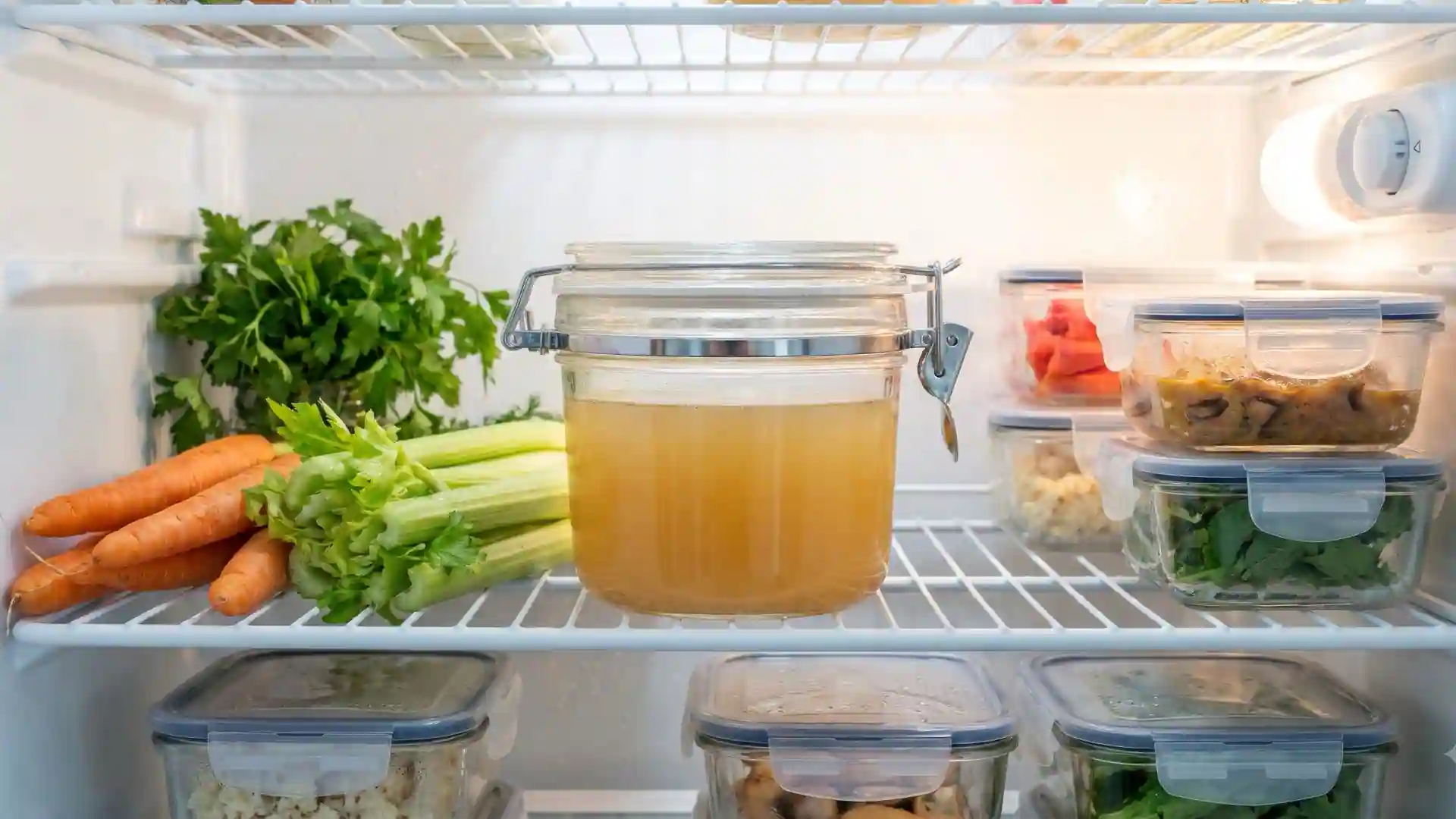
How Should You Store Chicken Broth in the Refrigerator?
Good chicken broth storage depends on prompt refrigeration, clean containers, and a fridge maintained at 40°F (4°C) or below. Follow these practical steps to protect leftover broth during its recommended storage period.
1. Transfer Broth to a Suitable Container
If you have leftover homemade broth, transfer it into clean, food-safe containers with secure lids.
Glass containers and food-grade plastic containers are suitable options. Choose containers that are easy to seal and appropriate for refrigerated food storage.
For store-bought broth, you can generally keep it in its original carton if the packaging is intact, closes securely, and the manufacturer permits refrigerated storage. Otherwise, transfer the remaining broth to a clean airtight container.
2. Refrigerate the Broth Promptly
Do not leave chicken broth sitting on the kitchen counter for several hours after cooking or opening.
The USDA recommends refrigerating perishable food within two hours. If the surrounding temperature is above 90°F (32°C), the limit is one hour.
This is particularly important in warm environments. Refrigerate opened broth and freshly prepared broth promptly rather than leaving them at room temperature.
3. Use Shallow Containers for Faster Cooling
A large pot of hot chicken broth can take longer to cool than smaller portions. To help it cool safely, divide the broth into smaller amounts and place them in shallow containers.
Follow these steps:
- Divide large quantities into smaller portions.
- Use clean, shallow, food-safe containers.
- Place the containers in the refrigerator promptly rather than waiting for the broth to reach room temperature.
- Cover the containers securely once the broth has cooled.
Small amounts of hot food can go directly into the refrigerator. Large quantities should be divided into shallow containers to encourage faster, more even cooling.
4. Keep the Broth Covered
Always close the container securely after storing chicken broth.
An airtight lid helps prevent spills, reduces exposure to other food odors, and protects the broth from contamination during storage. Avoid repeatedly leaving the container open on the kitchen counter while preparing meals, and optimize your kitchen so the fridge stays within easy reach.
5. Label the Storage Date
A simple label can help you track how long the broth has been refrigerated.
Write the date you opened the carton or prepared the homemade broth on the container. This is especially useful if you regularly prepare homemade broth, keep several opened cartons in the refrigerator, or store fresh ginger and other kitchen staples.
How Can You Tell If Chicken Broth Has Gone Bad?
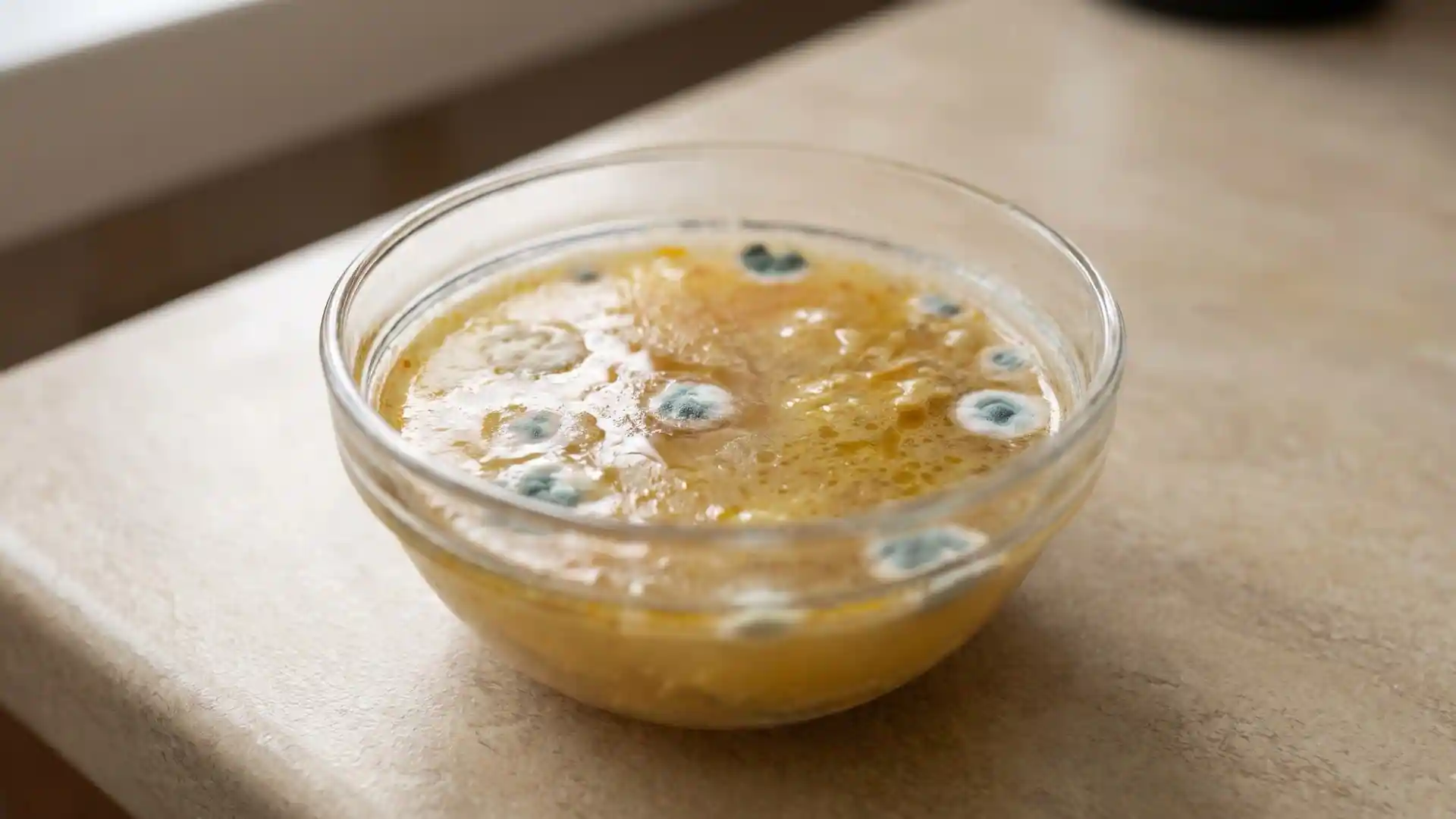
Even when you know how long does chicken broth last in the fridge, you should check for signs of spoilage before using it. Spoiled chicken broth may develop an unpleasant sour or rancid smell, visible mold, unusual discoloration, or an unexpected slimy texture. These changes can indicate spoilage, but their absence does not prove that the broth is safe. Always consider its storage history and recommended refrigerator shelf life before using it.
Look for the following warning signs when checking leftover chicken broth.
1. Unpleasant or Sour Smell
Fresh chicken broth usually has a mild savory smell. If it develops a strong sour, rancid, or otherwise unpleasant odor, discard it.
An unusual smell can indicate that the broth has deteriorated. Do not taste it to confirm whether it has spoiled.
2. Visible Mold Growth
Mold is a clear reason to discard chicken broth. It may appear as fuzzy spots or patches on the surface or around the container’s edges. Its color can vary.
Do not remove the visible mold and use the remaining broth. Discard the entire contents and clean the storage container thoroughly.
3. Unusual Discoloration
Chicken broth can naturally vary in color depending on the ingredients and preparation method.
However, unexpected changes in appearance, especially when accompanied by an unpleasant smell or other spoilage indicators, should be treated cautiously. Do not assume that broth is safe simply because it retains its original color.
4. Unexpected Slimy or Unusual Texture
Homemade chicken broth may become thick or jelly-like after refrigeration because gelatin from chicken bones solidifies as it cools.
This is normal and does not automatically indicate spoilage. However, an unusual slimy texture, particularly when combined with an unpleasant smell or other changes, is a warning sign.
5. Swollen or Damaged Packaging
Check commercially packaged broth before opening and using it.
Discard products with leaking cartons, damaged seals, unusual swelling, or other signs of packaging damage. Do not taste the contents to assess their condition.
Can Chicken Broth Go Bad Without Visible Signs?
Yes. Harmful bacteria may be present without changing the broth’s smell, appearance, or taste.
This is why you should not rely only on a visual inspection or smell test. If the broth has been refrigerated longer than the recommended storage period or left at room temperature for too long, discard it even if it looks normal.
Can You Freeze Chicken Broth to Extend Its Shelf Life?
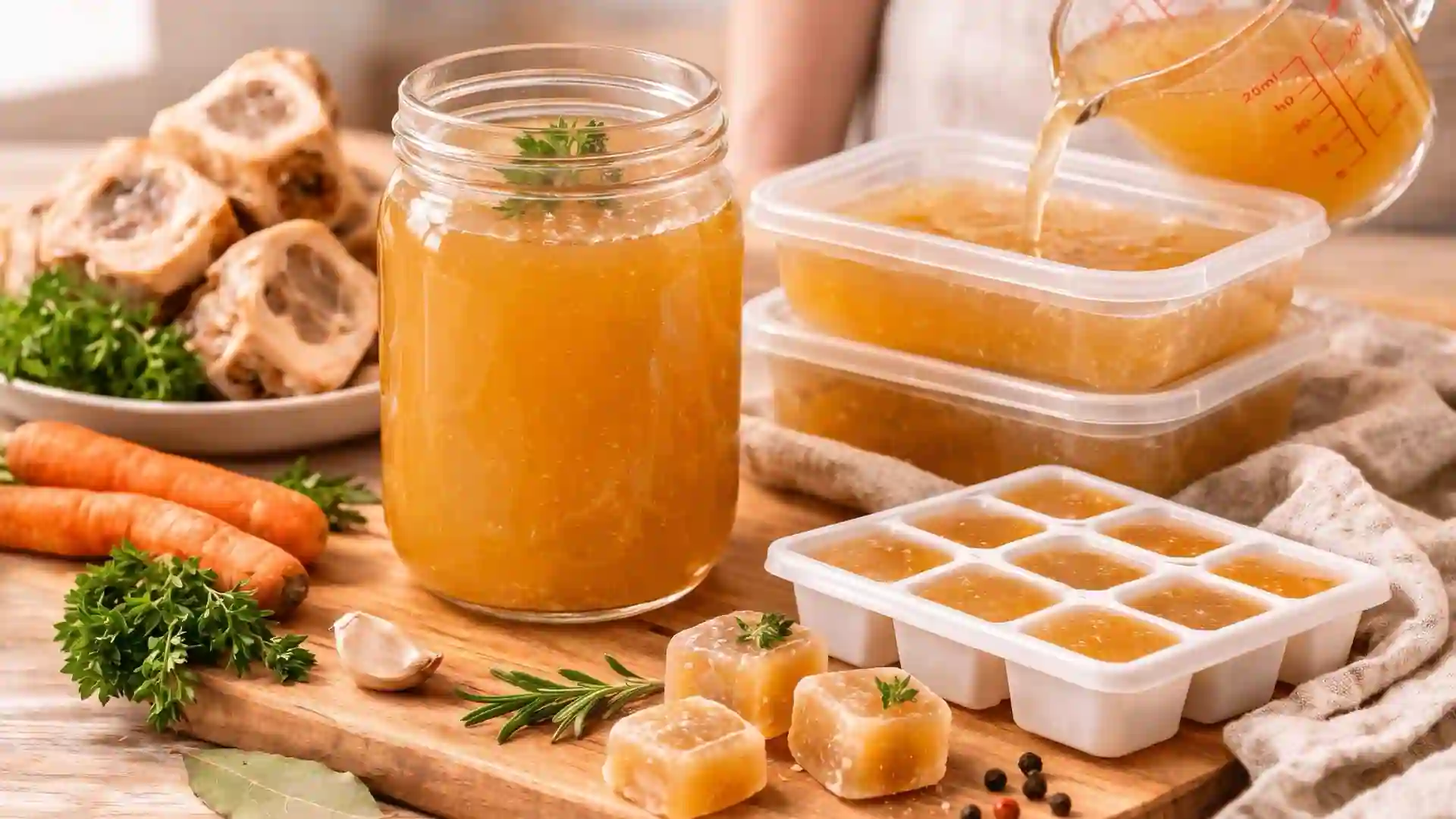
Freezing is a useful option when you cannot use chicken broth within its recommended fridge storage period. Freezing chicken broth is a convenient way to preserve leftover broth when you cannot use it within its recommended refrigerator storage period. Store it in freezer-safe containers, leave room for expansion, and divide it into portions for easier thawing and use.
The USDA recommends freezing chicken broth for 2 to 3 months for best quality. Freezing is particularly useful when you prepare homemade chicken broth in large quantities or regularly have leftover broth from opened cartons.
How to Freeze Homemade or Store-Bought Chicken Broth
Follow these steps to freeze chicken broth properly:
- Refrigerate the broth promptly using safe cooling practices.
- Divide it into portions based on how much you typically use in recipes.
- Transfer the broth into freezer-safe containers or heavy-duty freezer bags.
- Leave some space at the top because liquids expand as they freeze.
- Seal the containers securely to prevent leaks and freezer odors.
- Label each container with the freezing date.
- Place the containers in the freezer at 0°F (-18°C) or below.
Avoid freezing broth in glass containers that are not designed for freezer use, as expansion can cause them to crack.
Can You Freeze Chicken Broth in Ice Cube Trays?
Yes. Ice cube trays are convenient for freezing small quantities of chicken broth.
This method works particularly well when you only need a little broth to prepare sauces, gravies, rice, or vegetables, a handy trick in many cooking tips for beginners.
Here is how to do it:
- Pour cooled chicken broth into clean ice cube trays.
- Leave a little space at the top of each compartment.
- Freeze until the cubes become solid.
- Transfer the frozen cubes into a labeled freezer-safe bag.
- Return the bag to the freezer.
You can then take out individual cubes whenever a recipe requires a small amount of broth.
How Should You Thaw Frozen Chicken Broth?
The refrigerator is the preferred method for thawing frozen chicken broth because it keeps the broth at a consistently cold temperature while it defrosts.
Place the frozen container in the refrigerator and allow it to thaw. The time required depends on the quantity and size of the frozen portion. Once thawed in the refrigerator, use the broth within 3 to 4 days.
You can also thaw chicken broth in cold water or in the microwave. If you use the cold-water method, place the broth in a leakproof bag or container to prevent water and surrounding contaminants from entering it.
Broth thawed in cold water or the microwave should be heated immediately. Never thaw frozen chicken broth on the kitchen counter.
For additional guidance, see the USDA instructions for thawing leftovers safely.
Is It Safe to Use Chicken Broth After Several Days?
Chicken broth stored in the fridge for more than 3 to 4 days should generally be discarded, even if it appears normal. Using broth after 5, 7, or 14 days is not recommended. Reheating or boiling cannot reliably make broth safe after improper storage.
Here are answers to common questions about using older chicken broth.
Can You Use Chicken Broth After 5 Days?
Five-day-old refrigerated chicken broth is beyond the recommended 3-to-4-day storage period.
Even if it has been kept in a covered container and looks normal, it may no longer be safe to consume. The safest option is to discard it rather than use it in soup, gravy, or another recipe.
Can You Use Chicken Broth After 7 Days?
No. Seven days is longer than the recommended refrigerator storage period for opened or freshly prepared chicken broth.
Do not assume that keeping the broth in an airtight container makes it safe for an entire week. Airtight storage helps protect food, but it does not stop bacterial growth completely.
Can You Use Chicken Broth After 14 Days or 3 Weeks?
No. Chicken broth that has remained in the refrigerator for 14 days or three weeks should be discarded.
The same applies to homemade broth and opened store-bought broth. Do not try to make old broth safe by boiling it, adding spices, or mixing it with fresh ingredients.
Can You Boil Bacteria Out of Chicken Broth?
Boiling can destroy many harmful bacteria, but it cannot reliably make chicken broth safe after improper storage. Heating does not reverse all the risks associated with food that has been stored too long or left at unsafe temperatures.
For this reason, do not boil broth to try to make it safe after it has exceeded the recommended refrigerator storage period or remained at room temperature too long. If you are unsure how the broth was handled or stored, discard it rather than attempting to rescue it through reheating.
How Long Can Chicken Broth Stay Out of the Refrigerator?
Chicken broth should not remain at room temperature for more than two hours. If the surrounding temperature is above 90°F (32°C), it should not be left out for more than one hour.
This rule applies to homemade broth and opened commercially packaged broth. If you accidentally leave broth on the kitchen counter overnight, discard it. Refrigerating it again or boiling it does not make it safe.
What Happens If You Eat Spoiled Chicken Broth?
Eating spoiled chicken broth can expose you to harmful microorganisms or toxins that cause foodborne illness.
Possible symptoms include:
- Nausea
- Vomiting
- Diarrhea
- Stomach cramps
- Fever
Symptoms and their severity vary depending on the contaminant and the person affected.
If you develop severe symptoms, signs of dehydration, persistent vomiting, bloody diarrhea, or a high fever after eating questionable food, seek medical advice.
Certain groups, including pregnant people, young children, older adults, and people with weakened immune systems, may be at greater risk of serious foodborne illness. These individuals should take extra care to follow safe food storage and handling practices.
What About Unopened Chicken Broth?
Unopened shelf-stable chicken broth can generally be kept in a cool, dry pantry until the date and storage conditions specified on its packaging.
However, not all chicken broth products are shelf stable. Some refrigerated varieties must remain refrigerated even before opening.
Keep these points in mind:
- Check whether the packaging says the product is shelf stable or requires refrigeration.
- Follow the manufacturer’s storage and date instructions.
- Avoid using cartons or cans with damaged seals, leaks, or swelling.
- Refrigerate the broth promptly after opening.
- Once opened, follow the recommended 3-to-4-day refrigerator storage period.
Do not assume that unopened chicken broth automatically lasts a year beyond its printed date. The appropriate storage period depends on the product, packaging, and manufacturer’s instructions.
Final Thoughts
Knowing how long does chicken broth last in the fridge helps you store leftovers safely, reduce food waste, and decide when freezing is a better option. Chicken broth generally keeps for 3 to 4 days in the refrigerator after opening or preparation, provided it is handled safely and stored at 40°F (4°C) or below. If you cannot use it within that period, freeze it in suitable portions for better long-term storage and quality.
Always consider how the broth was handled, not just how it looks or smells, and apply the same care when you store cut bell peppers and other prepped ingredients. When its storage history is uncertain or it has been kept beyond the recommended period, discard it rather than risk foodborne illness.
Frequently Asked Questions
Q: Can chicken broth go bad before its expiration date?
A: Yes. Chicken broth can spoil before its printed expiration or best-by date if the packaging is damaged, it is stored incorrectly, or it is left unrefrigerated when refrigeration is required. Always follow the package instructions and check for signs of spoilage.
Q: Why does homemade chicken broth turn gelatinous in the refrigerator?
A: Homemade chicken broth can become gelatinous when refrigerated because collagen from chicken bones turns into gelatin as the broth cools. This change in texture is normal and does not automatically mean the broth has spoiled.
Q: Can you refrigerate chicken broth in its original carton after opening?
A: Yes. You can refrigerate opened chicken broth in its original carton if the packaging is intact, closes securely, and the manufacturer permits refrigerated storage. Otherwise, transfer the remaining broth to a clean, airtight storage container.
Food Safety References
The storage recommendations in this article are based on guidance from established food safety authorities:
- USDA Food Safety and Inspection Service: How Long Can You Keep Chicken Broth in the Refrigerator?
- USDA Food Safety and Inspection Service: How Do I Handle Leftovers Safely?
- USDA Food Safety and Inspection Service: How Do You Thaw Leftovers Safely?
- CDC: Preventing Food Poisoning
- FoodSafety.gov: People at Risk of Food Poisoning
